

NATEC International Tackles RCRA's Most-Cited Violation With New RCRA Hazardous Waste Online Training
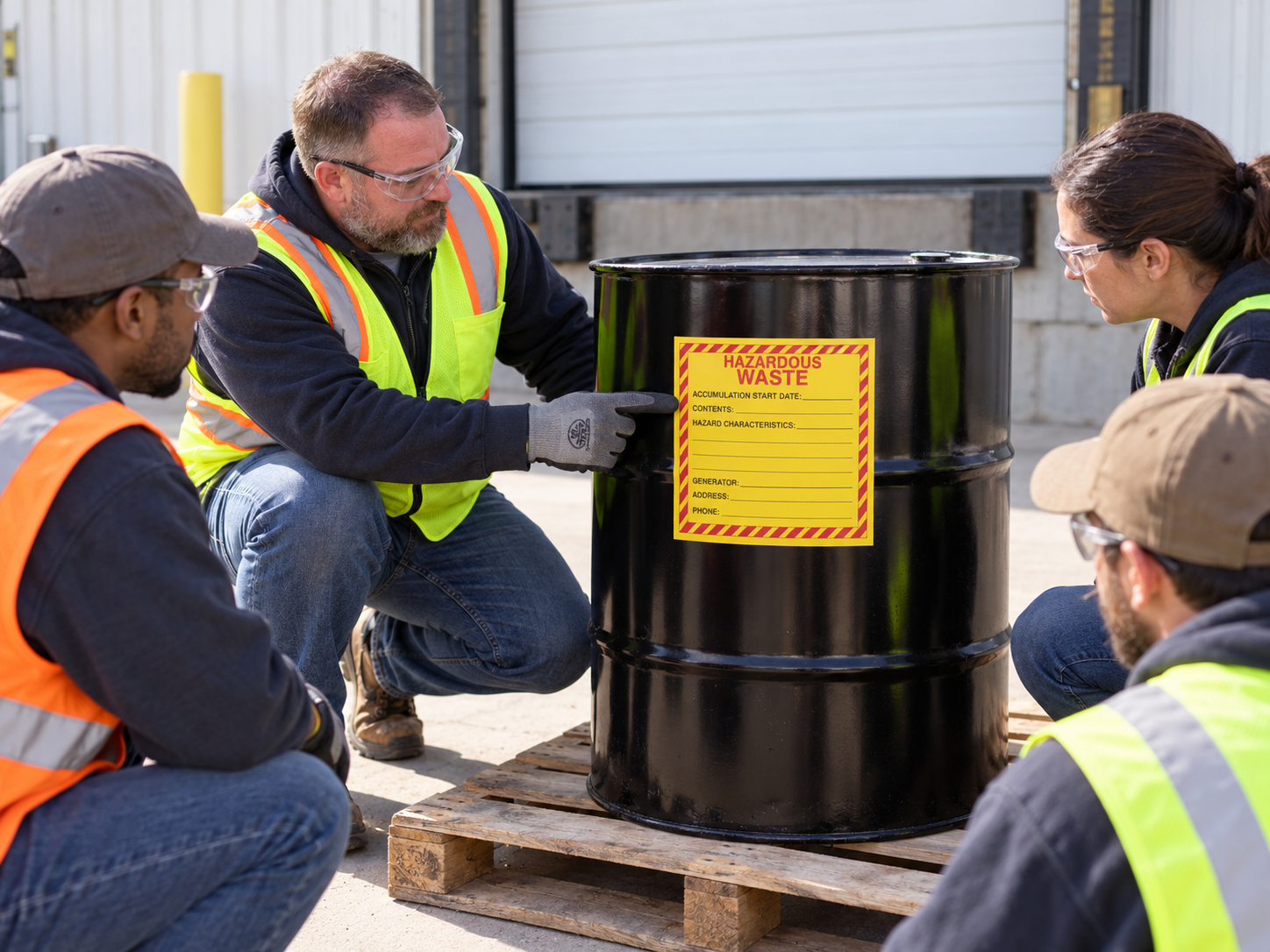
HAZMAT RCRA training at Loading Dock
RCRA Online Training with NATEC
Self-paced four-hour course turns complex federal hazardous waste regulations into real-world skills with interactive training modules
The RCRA Haz Waste training helped our team understand not just the regulations, but how to apply them when managing hazardous waste”
FOUNTAIN VALLEY, CA, UNITED STATES, October 21, 2026 /EINPresswire.com/ -- When EPA inspectors walk through a facility that generates hazardous waste, one of the first things they may look for is proof that every employee who touches that waste has been trained. Training violations consistently rank among the most frequently cited findings in RCRA inspections, and the consequences hit hard: penalties can reach $25,000 or more per violation per day under the federal enforcement structure. For facilities that have been getting by with informal training or no training at all, the question is not whether a gap exists. It is how fast they can close it.— Drake
Federal law requires large quantity generators to train every employee who handles hazardous waste within six months of hire or job reassignment, with an annual review each year after that. The rule, at 40 CFR 262.17(a)(7), also requires that any untrained employee work only under the direct supervision of someone who has completed the program. Small quantity generators must ensure their personnel are “thoroughly familiar” with waste handling procedures under 40 CFR 262.16(b)(9)(iii). Even very small quantity generators, while not formally required to train, are encouraged by EPA to do so as a best practice. The regulatory floor is clear, and the cost of falling below it is steep.
NATEC International, Inc., a nationwide environmental health and safety training company headquartered in Fountain Valley, California, built its RCRA Hazardous Waste Online Training course to close exactly this gap. The four-hour, self-paced online program is designed for the people who deal with hazardous waste every day: environmental coordinators, plant managers, warehouse supervisors, lab directors, shipping clerks and anyone whose duties put them in contact with regulated materials. Employers get 60 days of access from enrollment, which means staff can complete the training around shifts and operations instead of losing a full day to a classroom session.
The course follows hazardous waste from the moment it is generated to the moment it leaves the facility. It begins with waste determination, covering the four RCRA characteristics of ignitability, corrosivity, reactivity and toxicity (waste codes D001 through D043) along with listed wastes. From there, it moves through generator category thresholds and the accumulation rules that apply to each tier, including satellite accumulation limits, container and tank storage requirements, and the inspection schedules that keep a facility audit-ready.
One of the most detailed modules covers the Uniform Hazardous Waste Manifest, EPA Form 8700-22. The course breaks down every line item on the form, from generator identification and waste description through transporter acknowledgment and designated facility receipt. It also covers e-Manifest, the EPA electronic tracking system that has reshaped how generators submit, correct and store manifest records, along with manifest exceptions and the procedures required when discrepancies arise.
Emergency preparedness gets equal weight. The course covers contingency planning for large quantity generators, quick reference guides, and the emergency procedures small quantity generators must have in place. Personnel training records, biennial reporting, used oil management, universal waste, batteries, aerosol can puncturing and empty container rules round out the program.
What makes the difference between training that employees remember and training they forget by Friday is how the material is delivered. Every module in this course includes interactive games and knowledge checks that put employees inside real compliance scenarios. Instead of reading pages of regulatory text, workers identify waste characteristics, walk through manifest completion, and respond to emergency situations in exercises built around the decisions they will actually face on the job.
“The RCRA Haz Waste training helped our team understand not just the regulations, but how to apply them when managing hazardous waste,” said Drake, Vice President at GENI, a NATEC training client.
California-based generators who complete this federal course should also take NATEC’s California Title 22 hazardous waste training course, which covers state-specific requirements that go beyond the federal program. A facility operating in California needs both to be fully covered.
“Every facility that generates hazardous waste needs its people trained, and the federal rules put a clock on it. We built this course so employers can get new staff up to speed on their own schedule, before the six-month deadline arrives,” said Allison Croulet, Vice President of NATEC International, Inc.
Participants receive a certificate of completion, and the course qualifies for 4 REHS continuing education units through CDPH when requested before the course begins. NATEC also offers an annual RCRA refresher course for facilities that need to meet the yearly review requirement under 40 CFR 262.17. All NATEC training programs are available in classroom, online, in-person and virtual formats, giving employers the flexibility to train their teams however their operation demands.
Course details and registration are available at https://NATECintl.com or by contacting NATEC International, Inc. at (800) 969-3228 or training@NATECintl.com. Employers and safety managers can visit www.NATECintl.com to view the full catalog of environmental health and safety training programs.
Loi Tran
NATEC International, Inc.
+1 800-969-3228
Visit us on social media:
Instagram
Facebook
YouTube
X
Legal Disclaimer:
EIN Presswire provides this news content "as is" without warranty of any kind. We do not accept any responsibility or liability for the accuracy, content, images, videos, licenses, completeness, legality, or reliability of the information contained in this article. If you have any complaints or copyright issues related to this article, kindly contact the author above.
